Signage
& Branding System
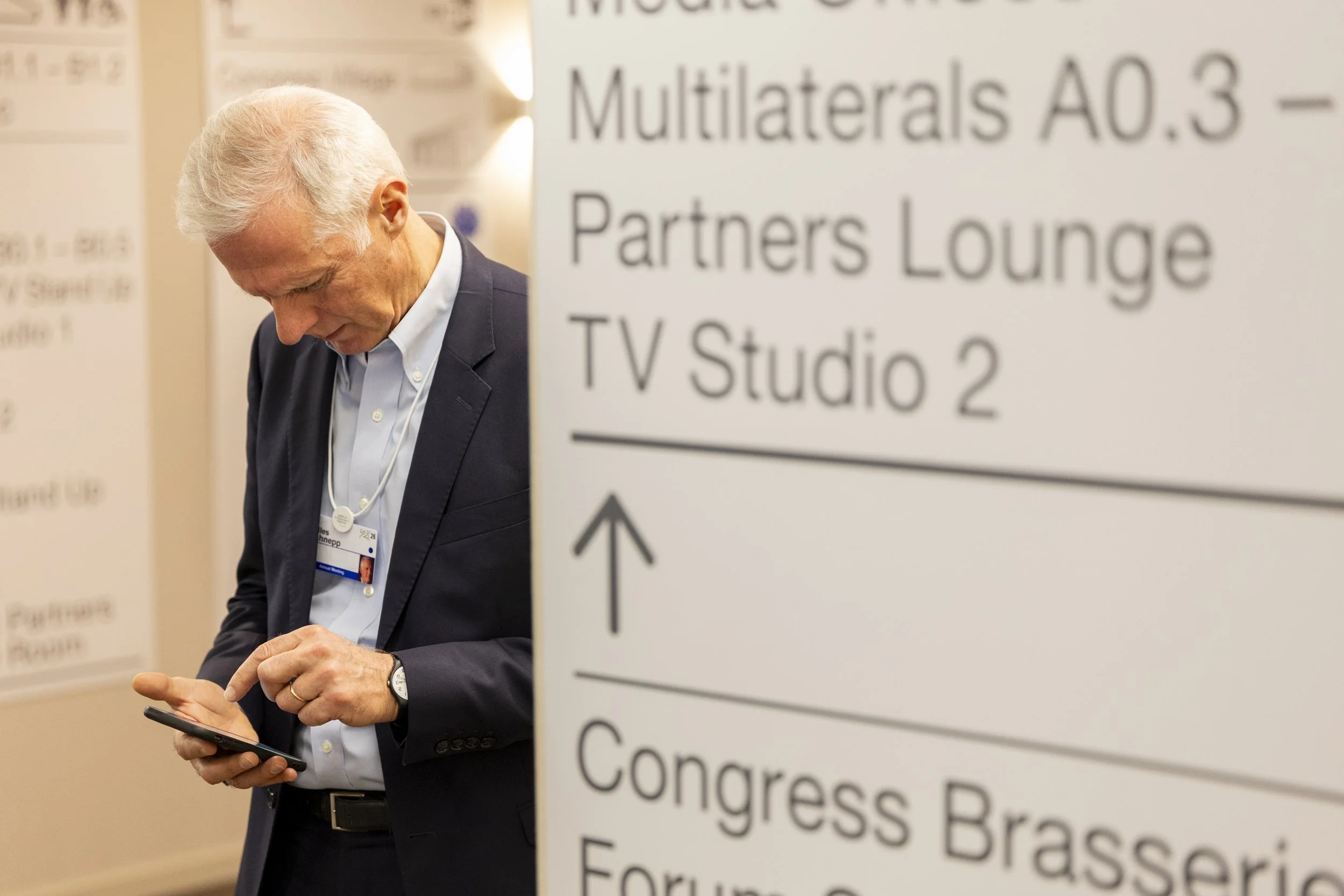
"Good wayfinding should feel effortless. You shouldn't have to think about how to get somewhere. The space should already be guiding you."
Project SnapshotWorld Economic Forum
2025 - 2026
Davos, Switzerland & Global
Branding & Wayfinding
Spatial Design LeadOrganisation
Year
Location
Type
RoleRoleAs Spatial Design Lead, I held overall design responsibility for the new wayfinding and spatial branding system, from concept development through to implementation. Working with PublicisLive and specialist consultancy Studio Gourdin, I led the development of the framework, including navigation logic, typography, iconography, signage standards, and environmental branding guidelines across all venues. I oversaw the production of 15 signage and environmental graphics books, covering over 1,000 assets.
I coordinated across event operations, security, technology, transport, and communications to ensure the system worked both spatially and operationally. This included integrating physical signage, venue maps, and digital navigation into one consistent experience. I also led the communications rollout, presenting the system to leadership, briefing internal teams and external partners, and overseeing its implementation on site.The BriefFor years, the Forum's signage had grown alongside the event, but without a framework or clear principles to guide decisions. Each edition brought new interpretations, inconsistencies and last-minute corrections. There was no common standard to work from, and no continuity from one event to the next.
The Annual Meeting 2025 exposed the cost of these shortcomings. Signage across an entire venue had to be reprinted on site, resulting in significant and avoidable costs. The post-event debrief made it clear that incremental improvements were no longer enough. The system needed to be fundamentally reconsidered.
What began as a wayfinding brief developed into a broader mandate: to establish a coherent, scalable wayfinding and branding system that could integrate physical signage, venue maps, and digital navigation while accommodating the operational complexity of the Forum's global events.
ObjectivesCreate a coherent design system. Establish a consistent visual language, hierarchy and set of standards for signage, wayfinding and branding across all venues.
Improve navigation and accessibility. Make complex environments easier to understand and navigate through clear zoning, legible typography, intuitive pictograms and multilingual information.
Connect physical and digital navigation. Align signage, venue maps and the MyForum app so participants could move between them without encountering conflicting information.
Build a scalable, reusable framework. Develop a system that could be adapted across international events, reduce duplication and production errors, and provide clear guidelines for future teams.
The ApproachI started by commissioning a signage analysis of the Annual Meeting 2025, working with PublicisLive and specialist consultancy Studio Gourdin to understand how participants moved through the venues, where navigation broke down, and what needed to change. This gave us a clear starting point for developing a framework that responded to the Forum's particular spatial and operational complexity.
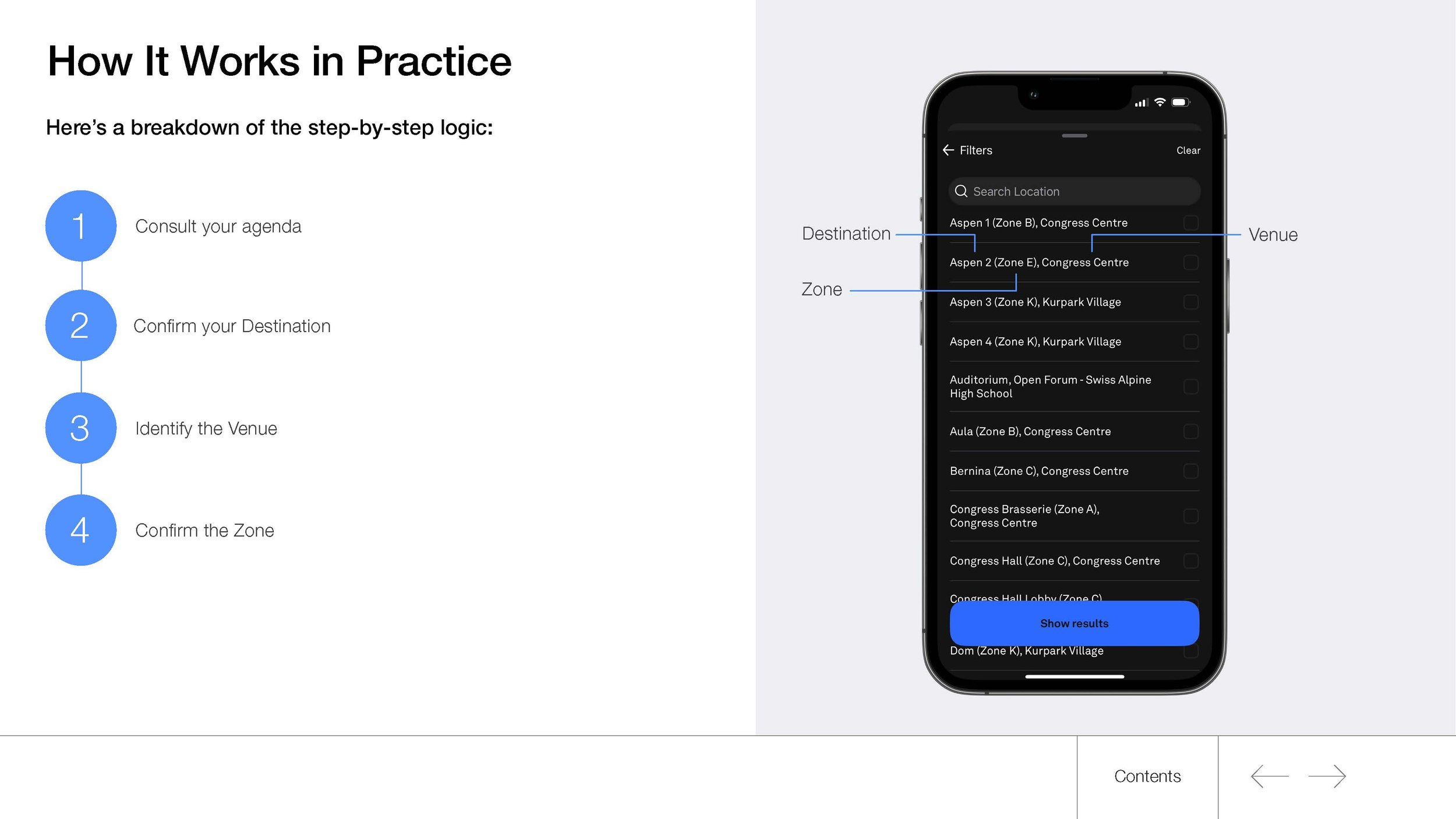
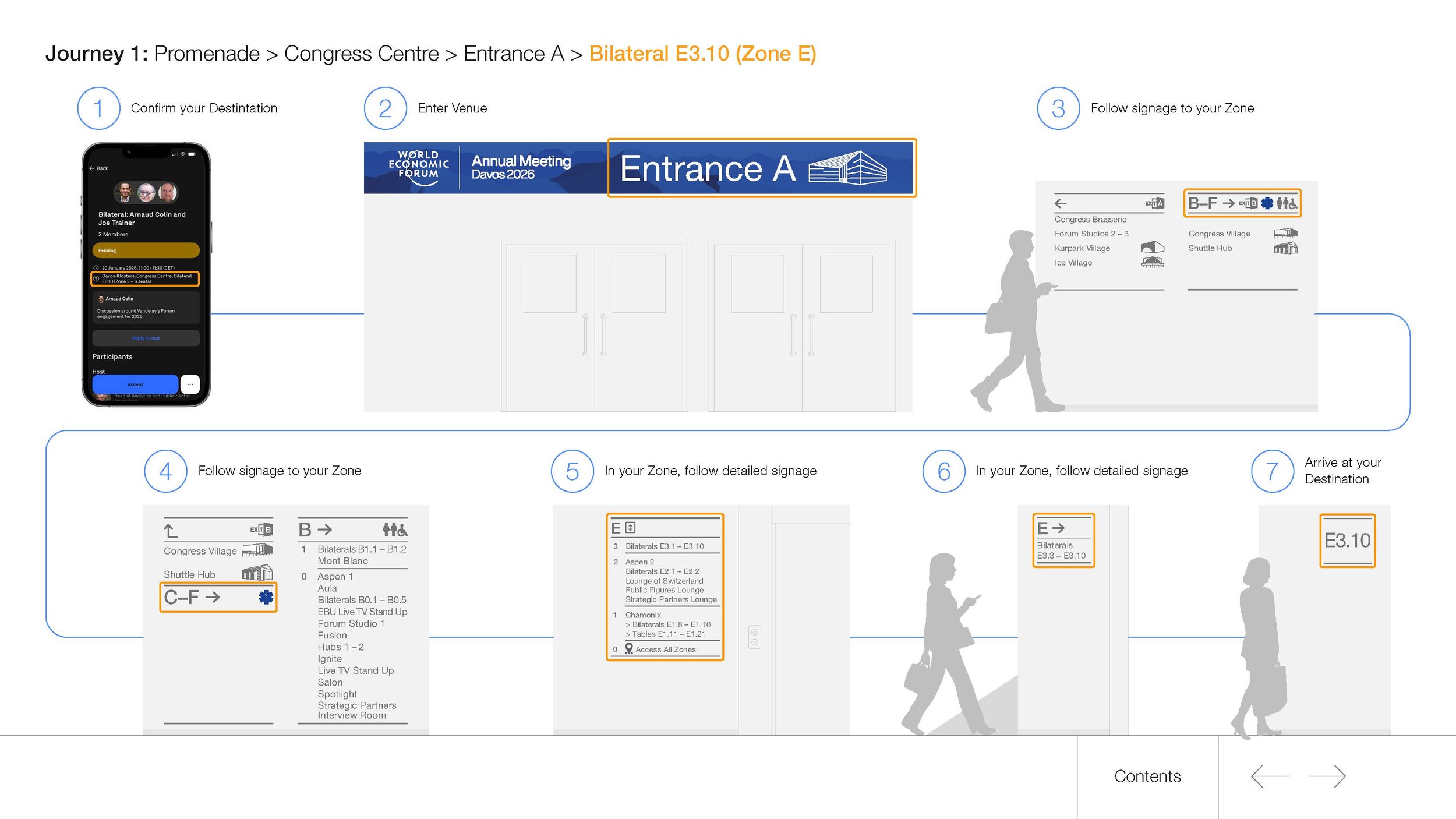
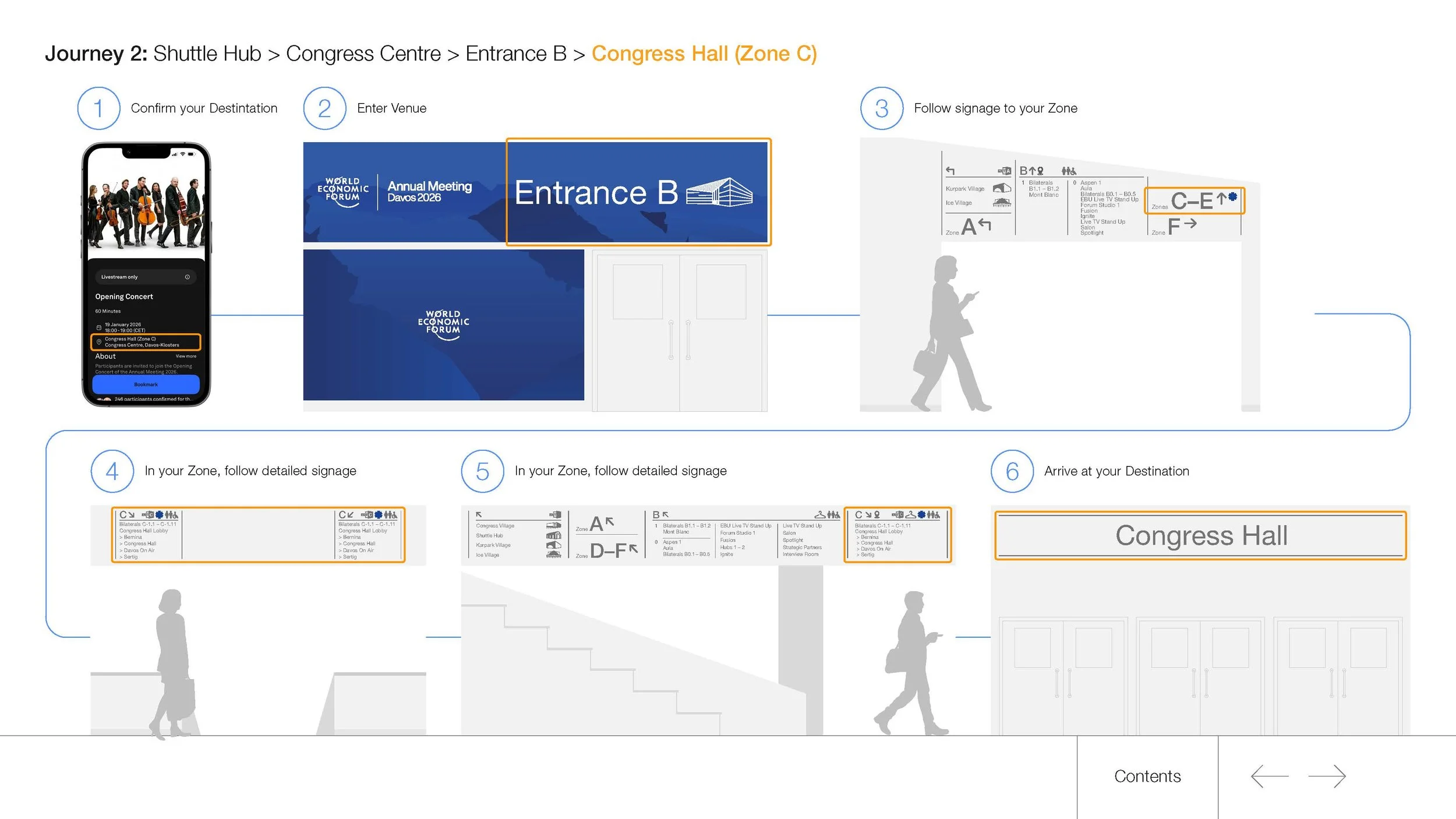
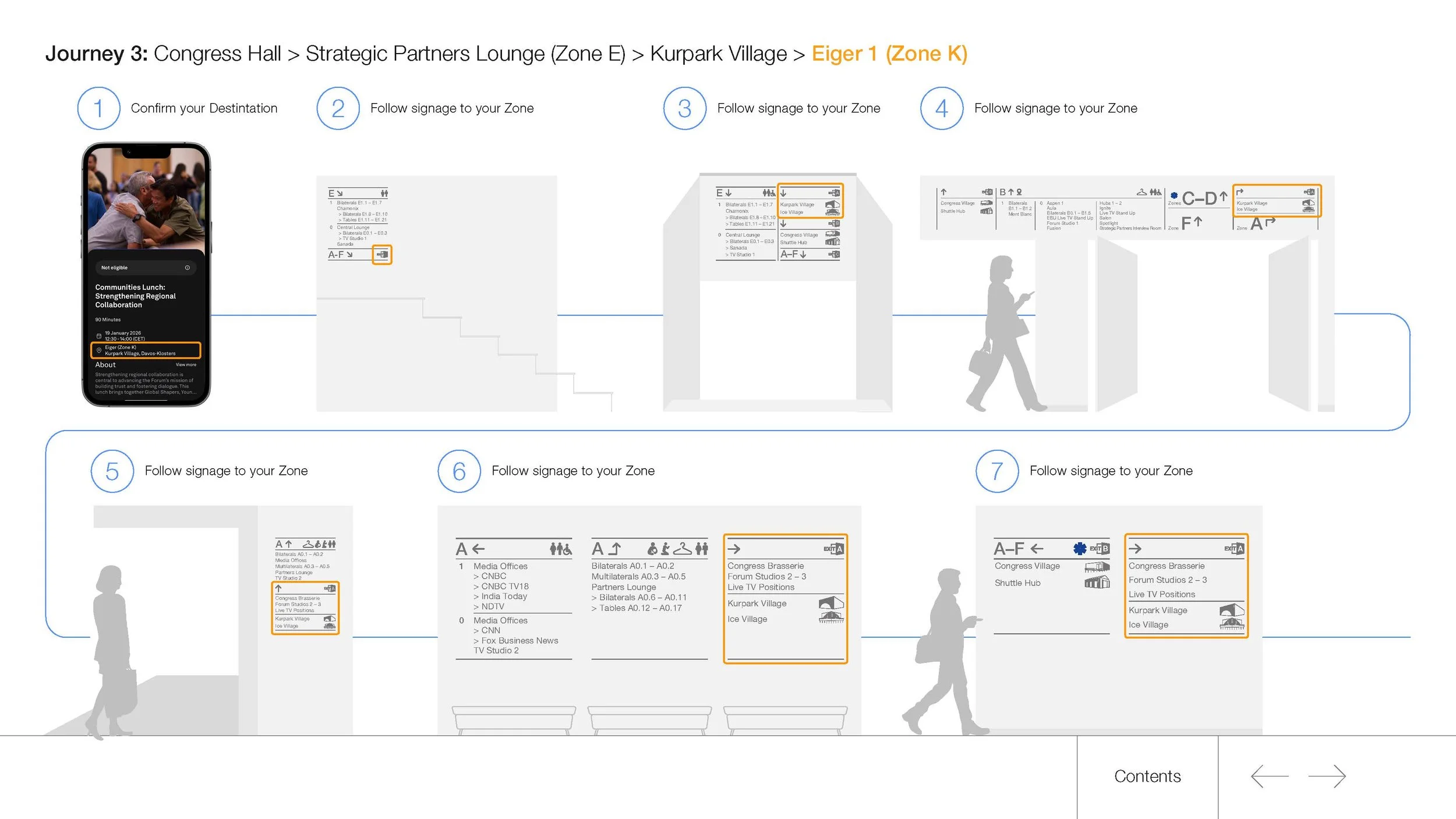
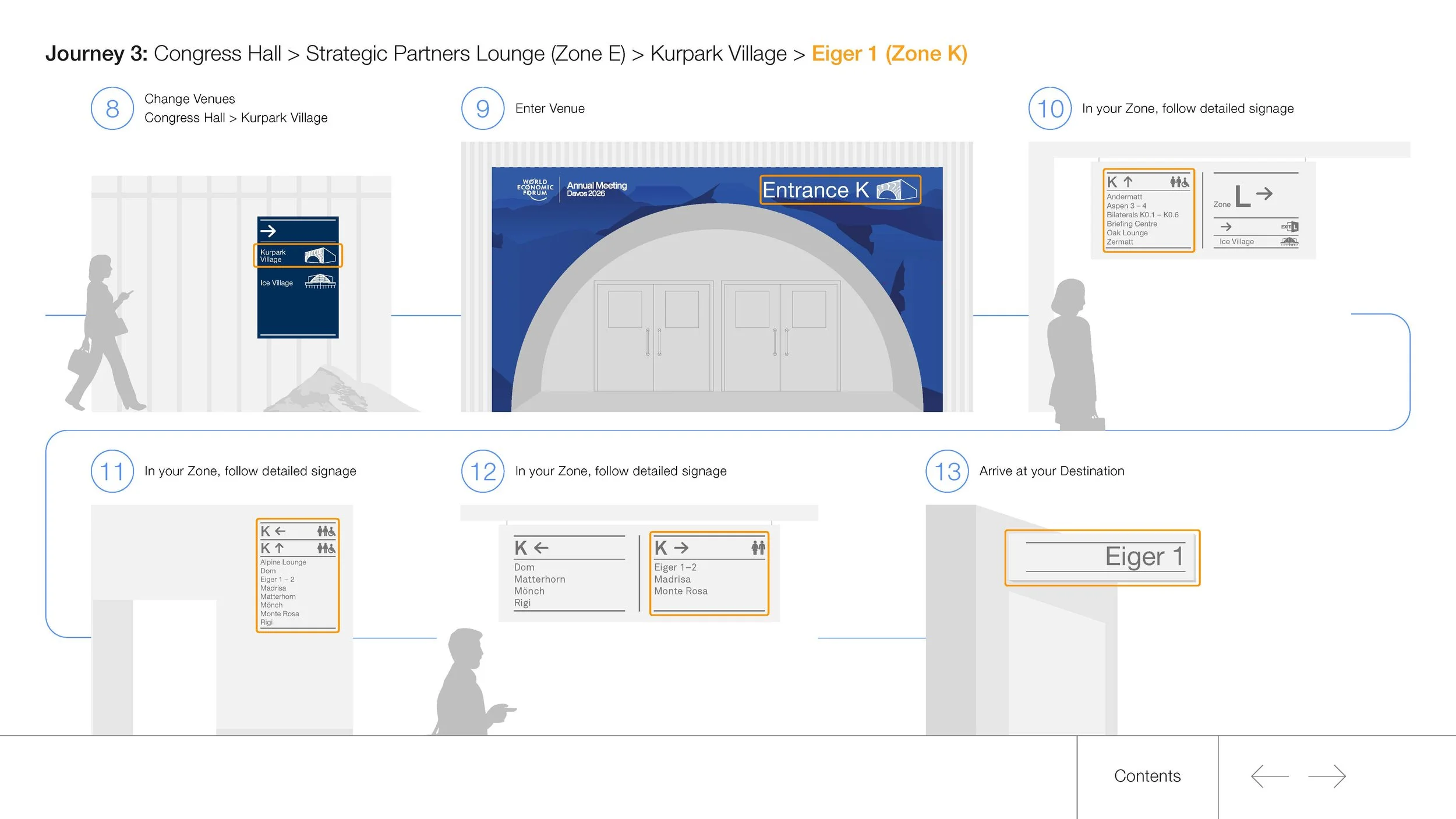
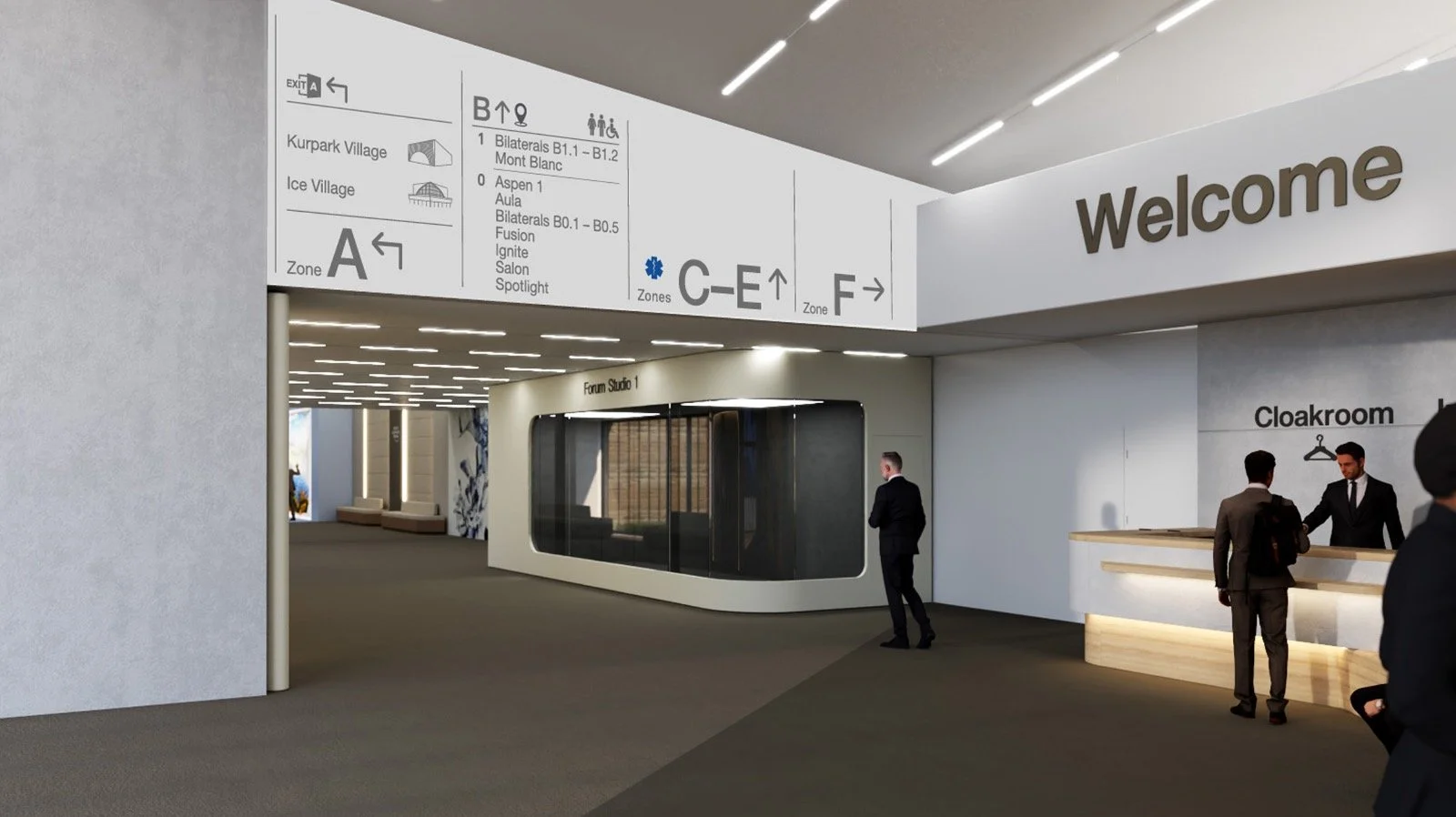
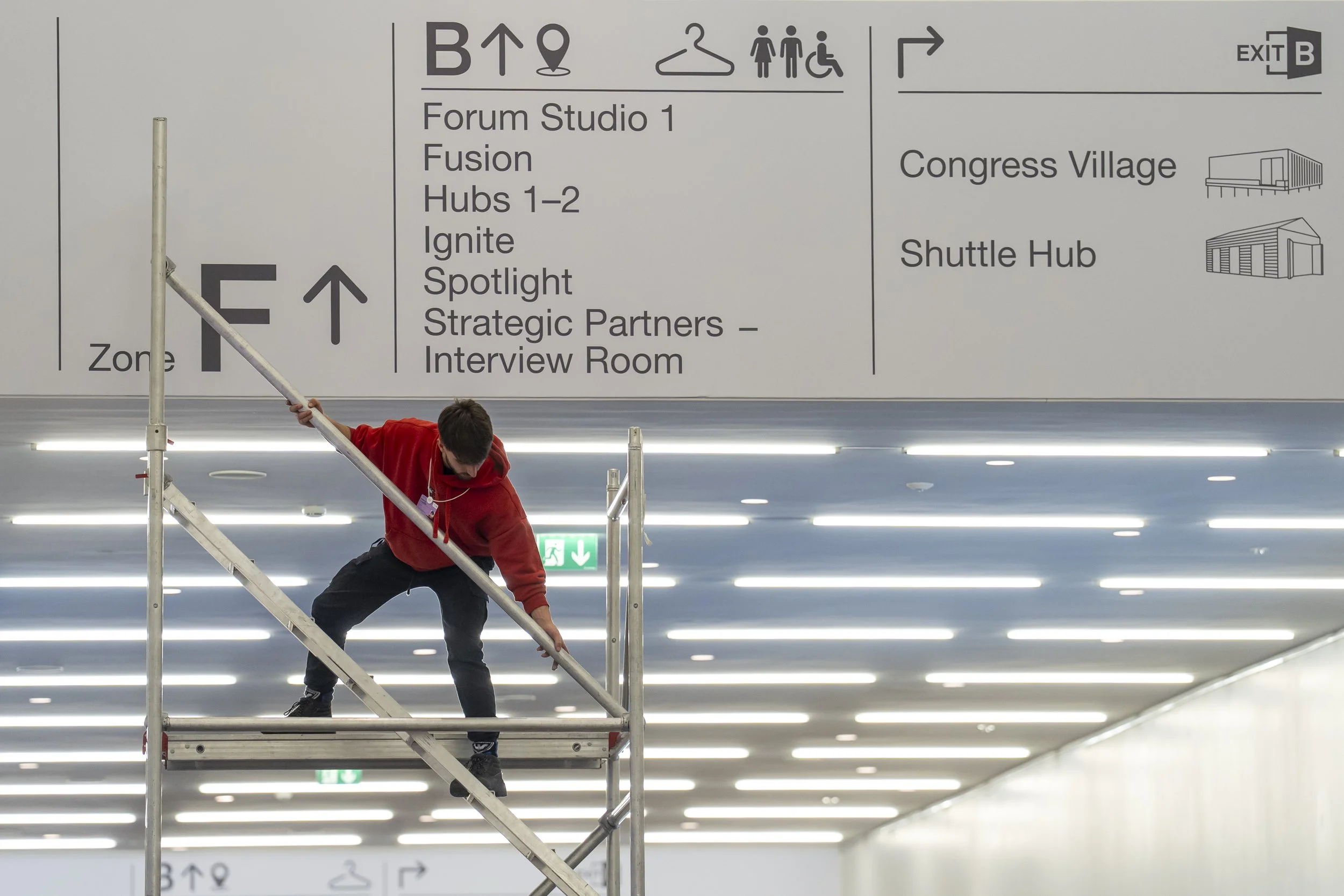
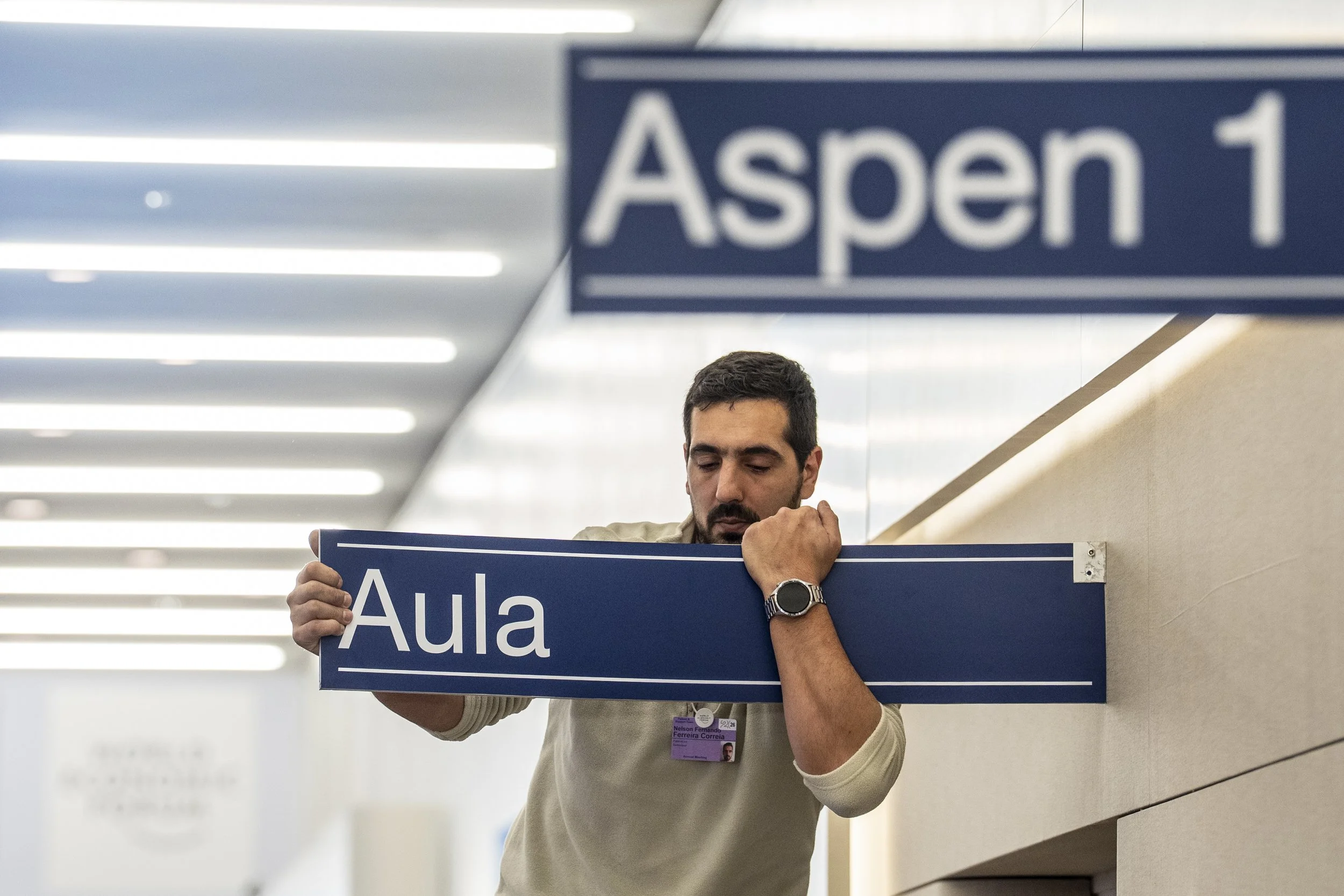
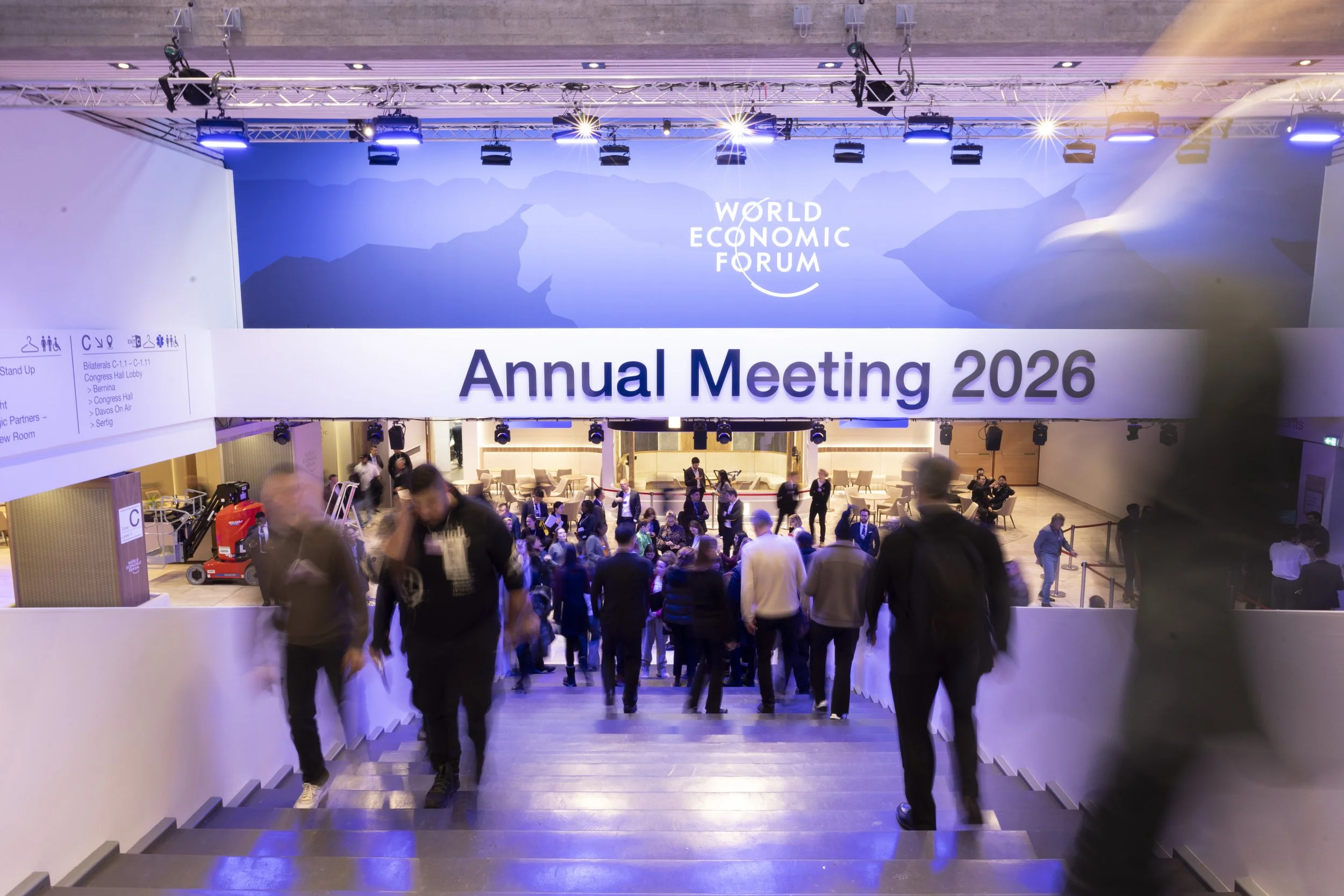
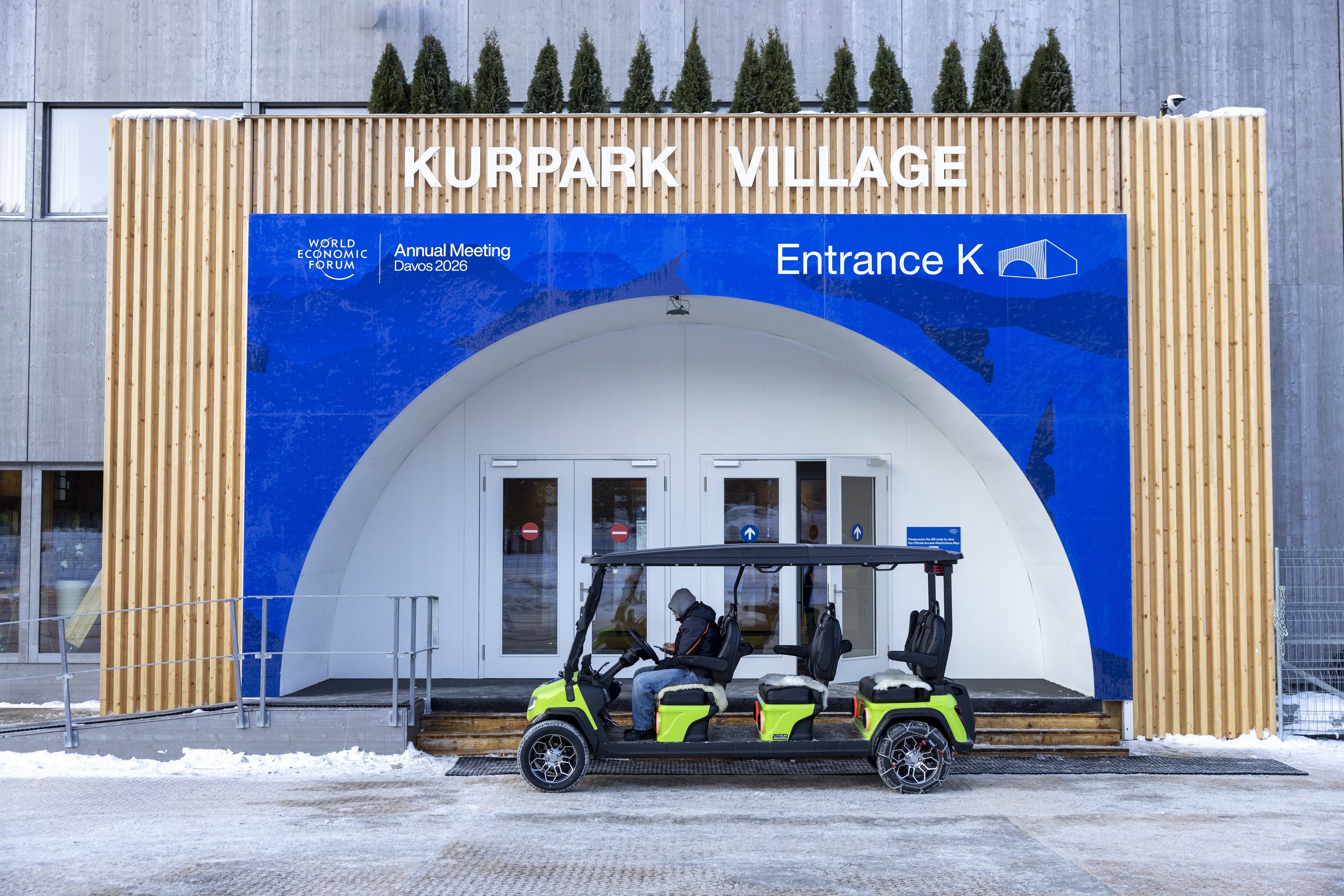
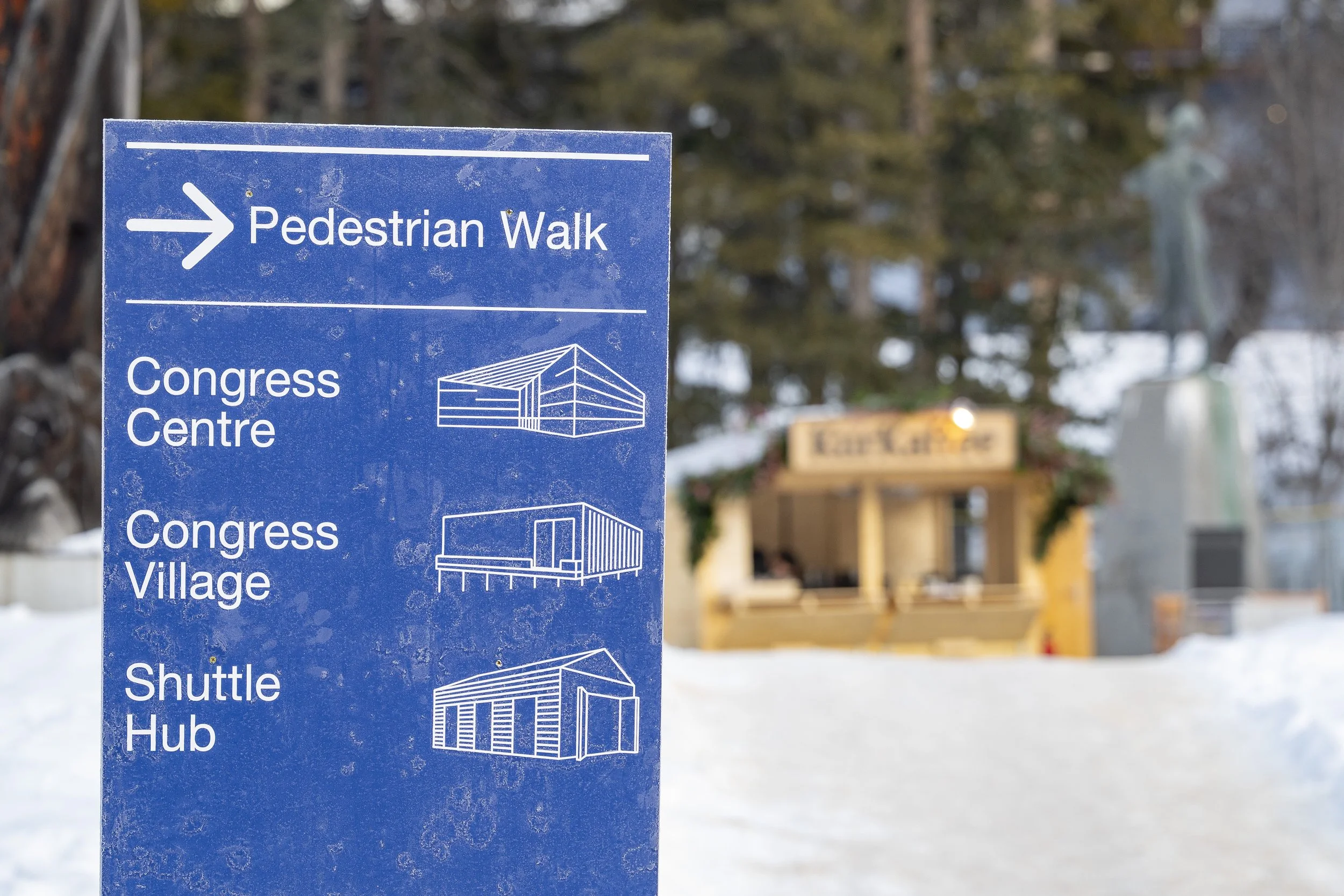
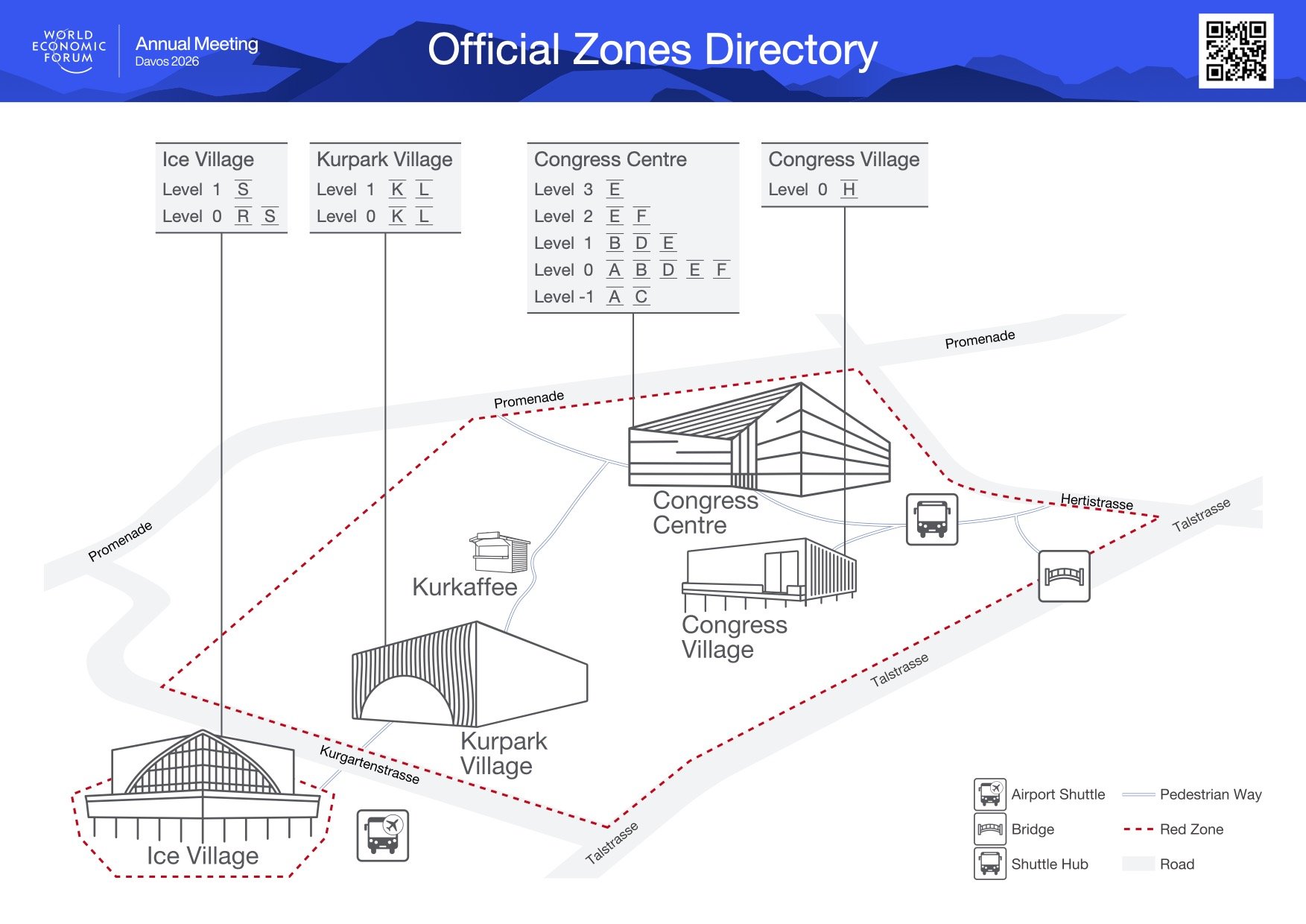
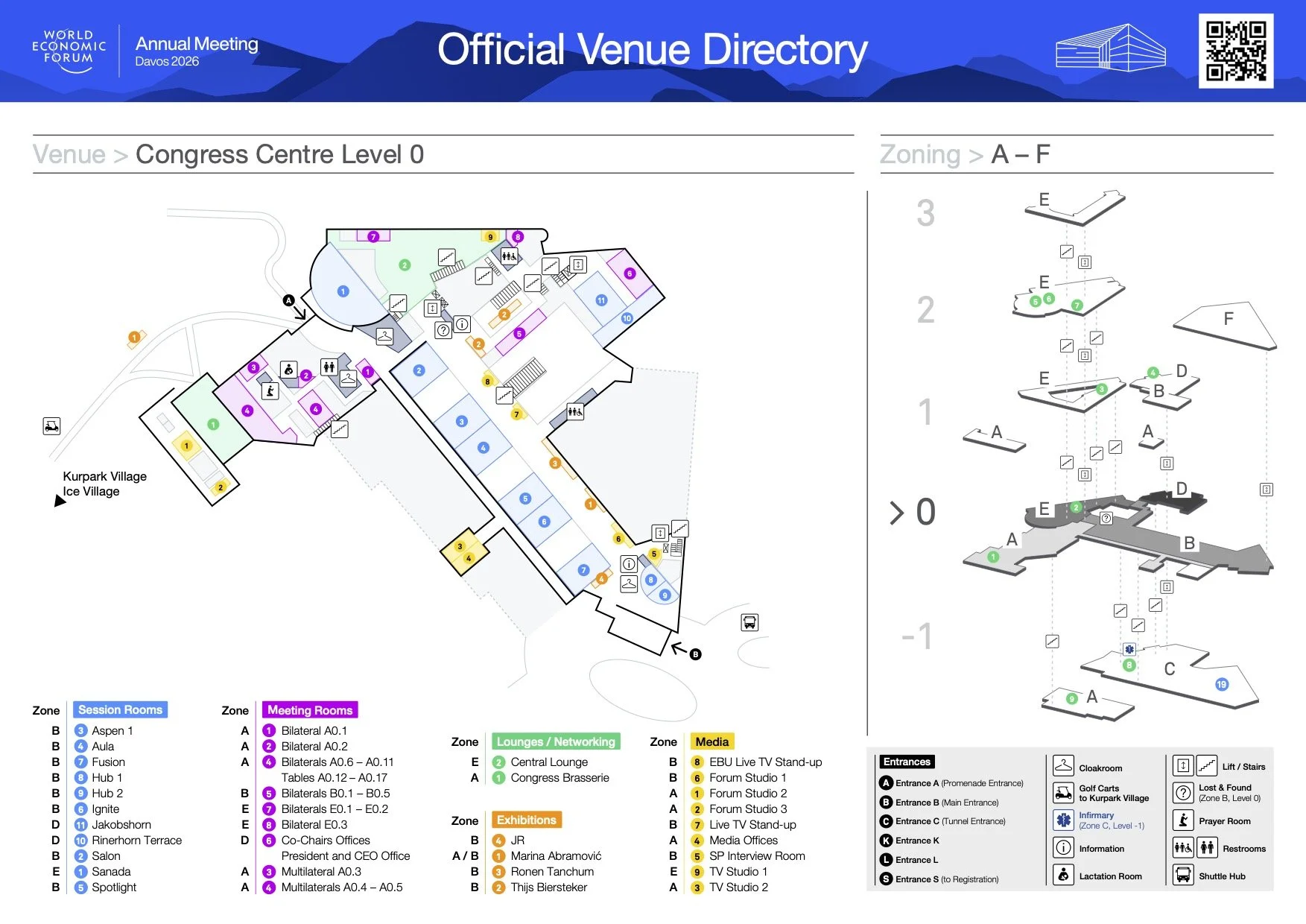
The navigation strategy drew on airport wayfinding principles: a zone-based hierarchy that guides participants from venue to zone to destination, revealing more detail as they move through the space. Each venue was divided into lettered zones, with consistent naming conventions, typography, pictograms and information hierarchy across signage and maps. The aim was to make the system intuitive, without requiring participants to learn a new set of rules at every venue.
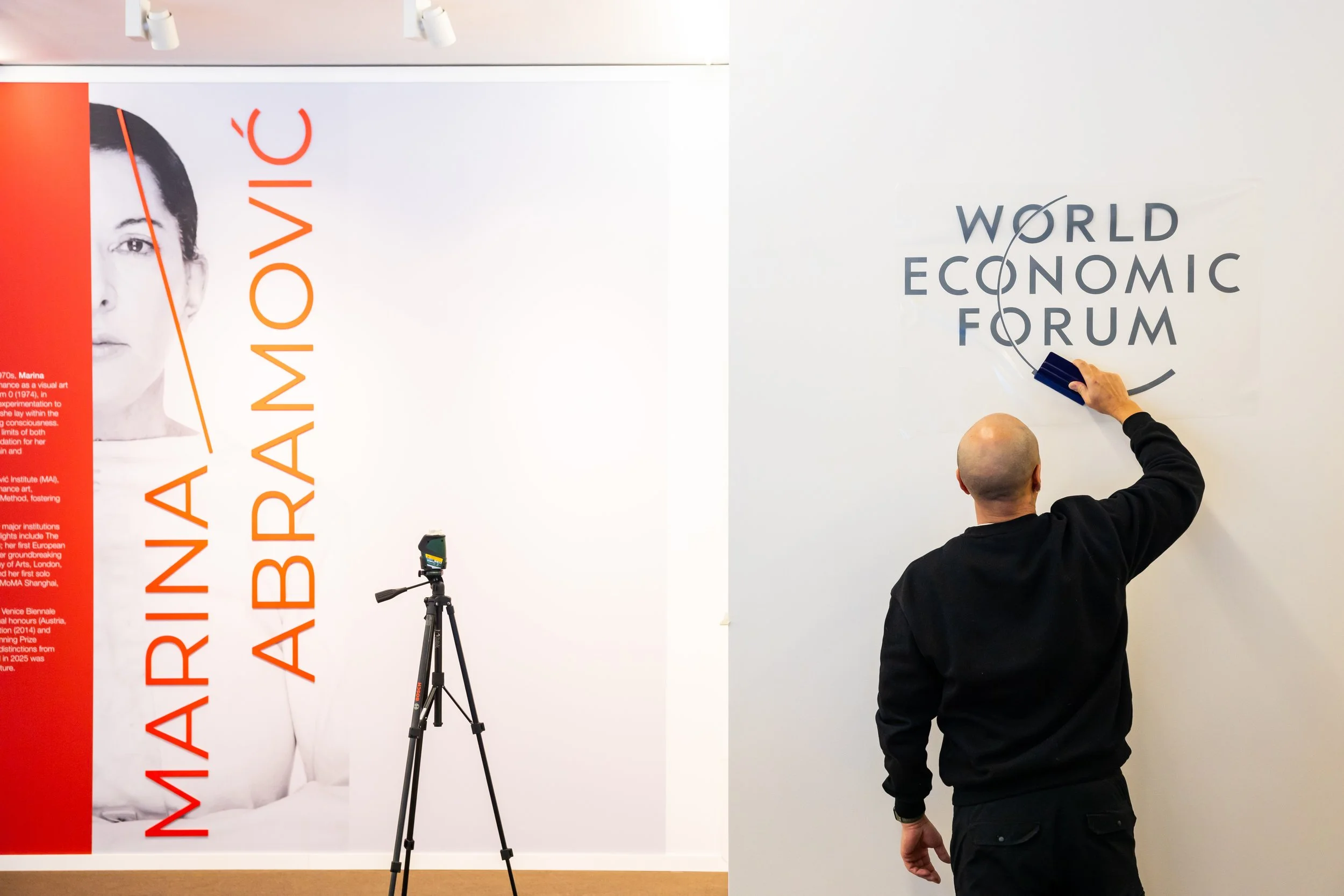
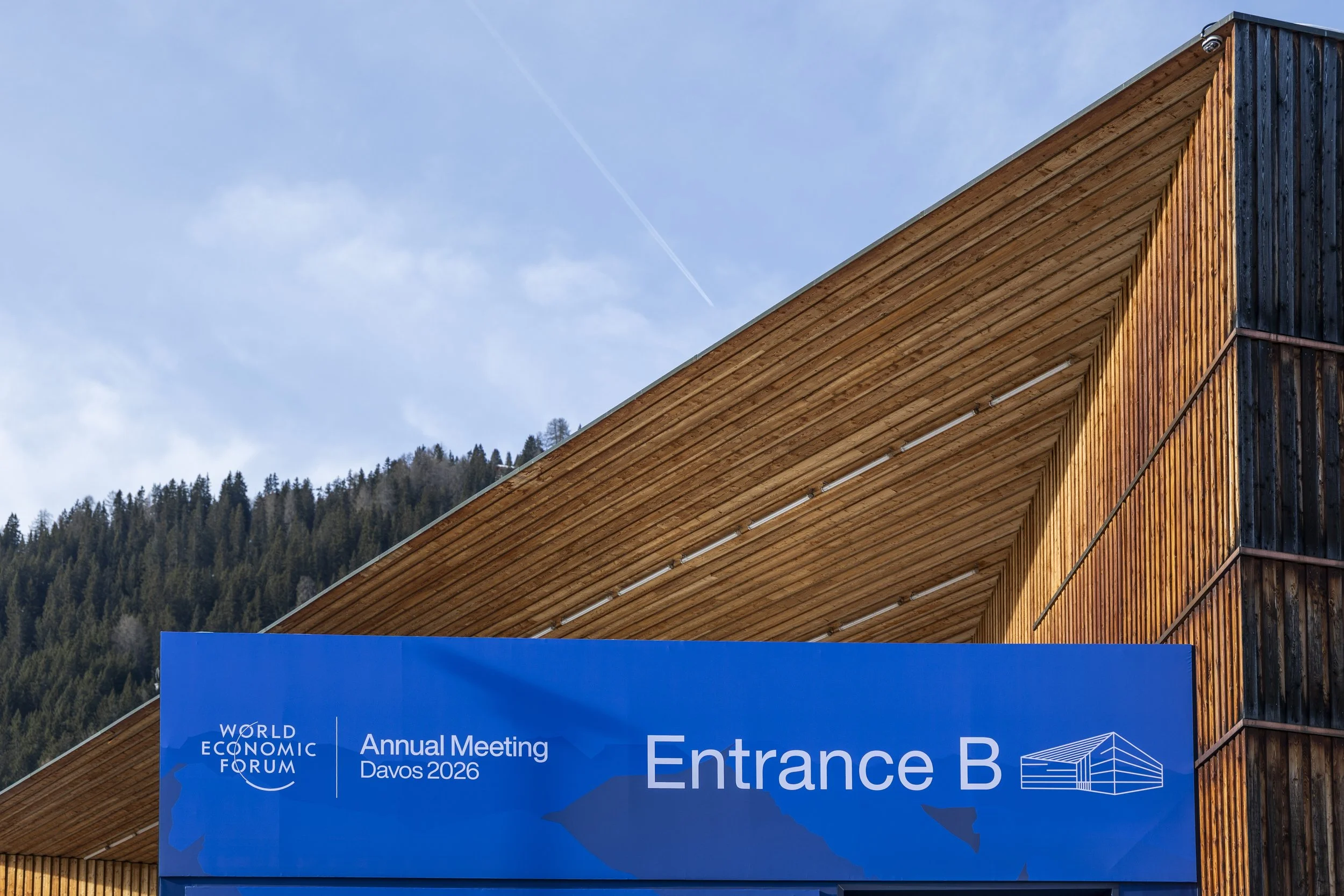
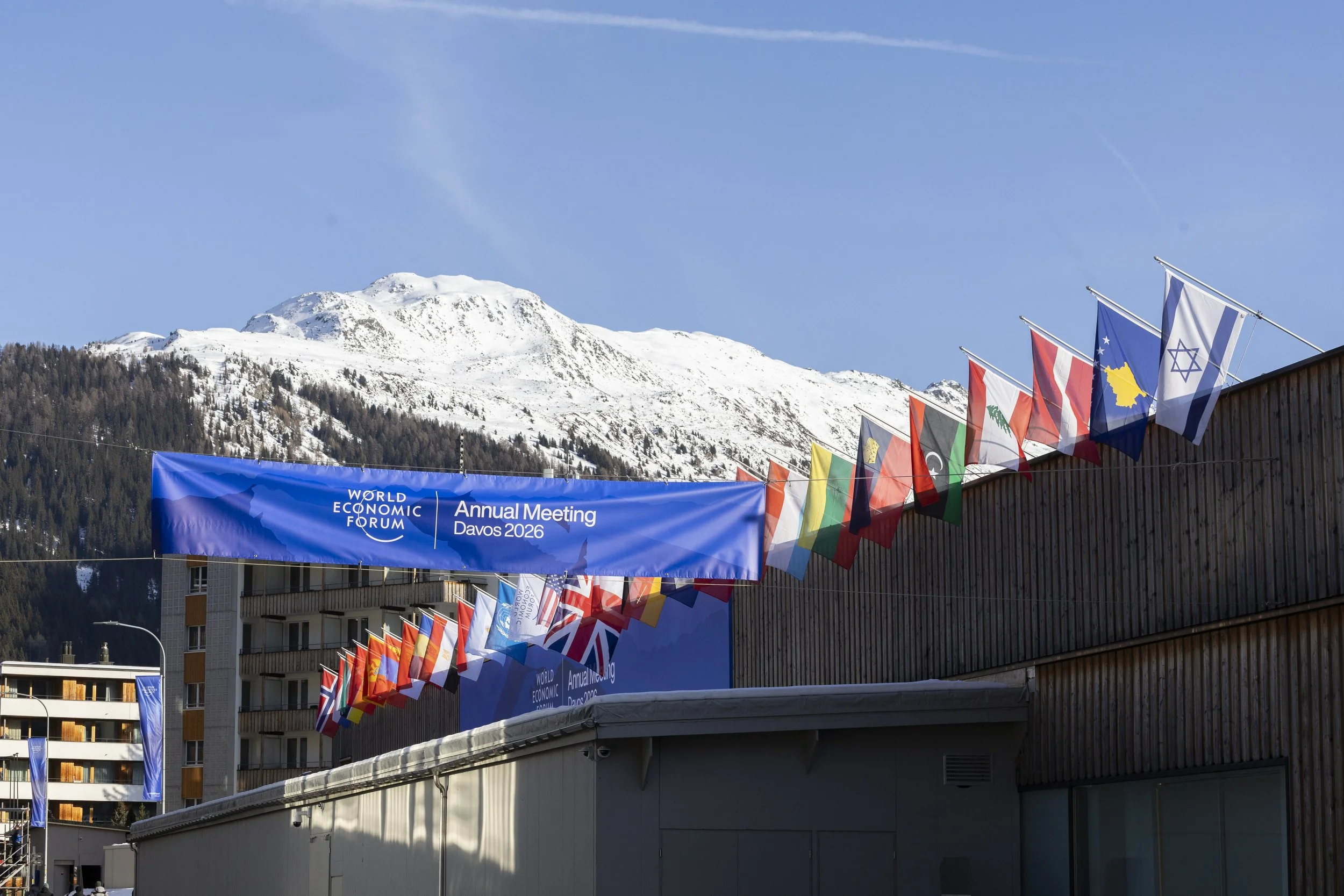
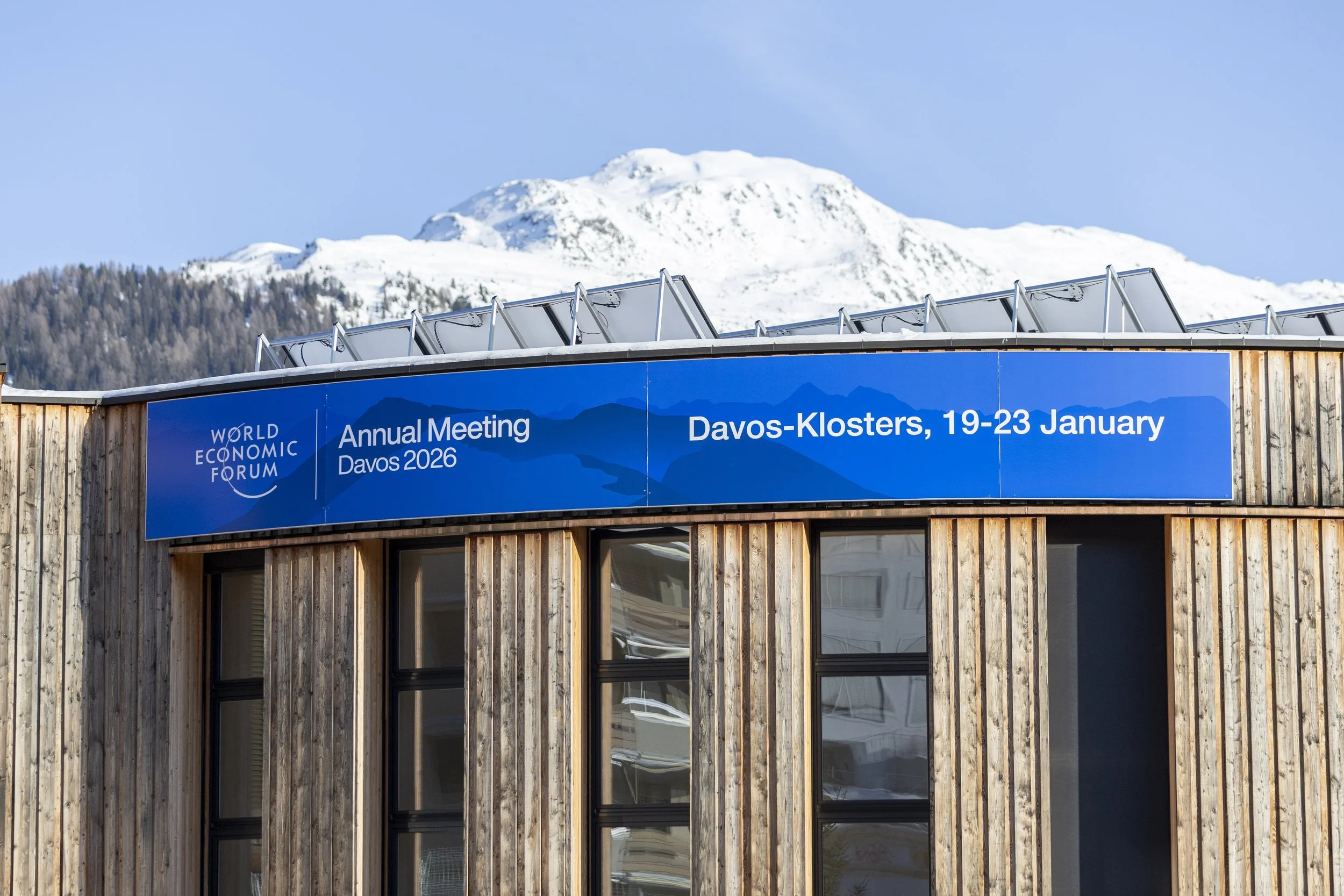
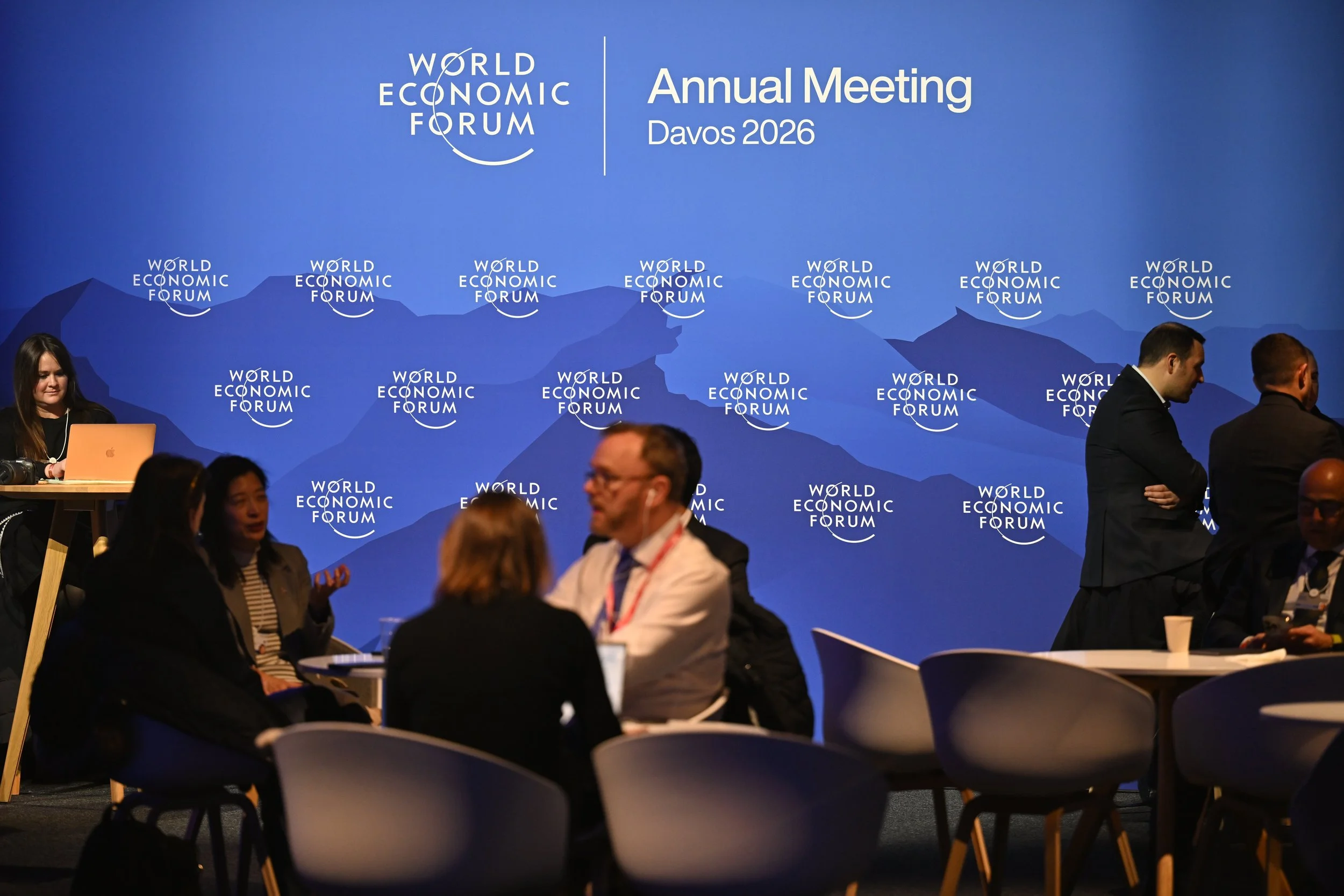
I applied the same thinking to spatial branding. Logo placement and scale had previously been determined largely by the available surface, resulting in inconsistent applications and unnecessary visual repetition. I developed environmental branding guidelines that established clear principles for scale, placement and visual hierarchy, bringing greater coherence to how the Forum's identity was expressed across its venues.
Connecting physical and digital navigation was one of the more complex challenges. The zoning and naming conventions needed to work consistently across signage, venue maps, the MyForum app and participant agendas. This required close coordination with event operations, technology, security and other internal teams to align information, resolve technical constraints and ensure the system could be implemented reliably.
Once the framework was approved, the focus shifted to adoption. Working with the communications and strategy lead, I coordinated the rollout across internal teams, partners and participants. This included staff briefings, partner presentations and a recorded studio session introducing the new navigation system ahead of Davos. The thinking was simple: for the system to work on site, people needed to understand it before they arrived.


The Result